
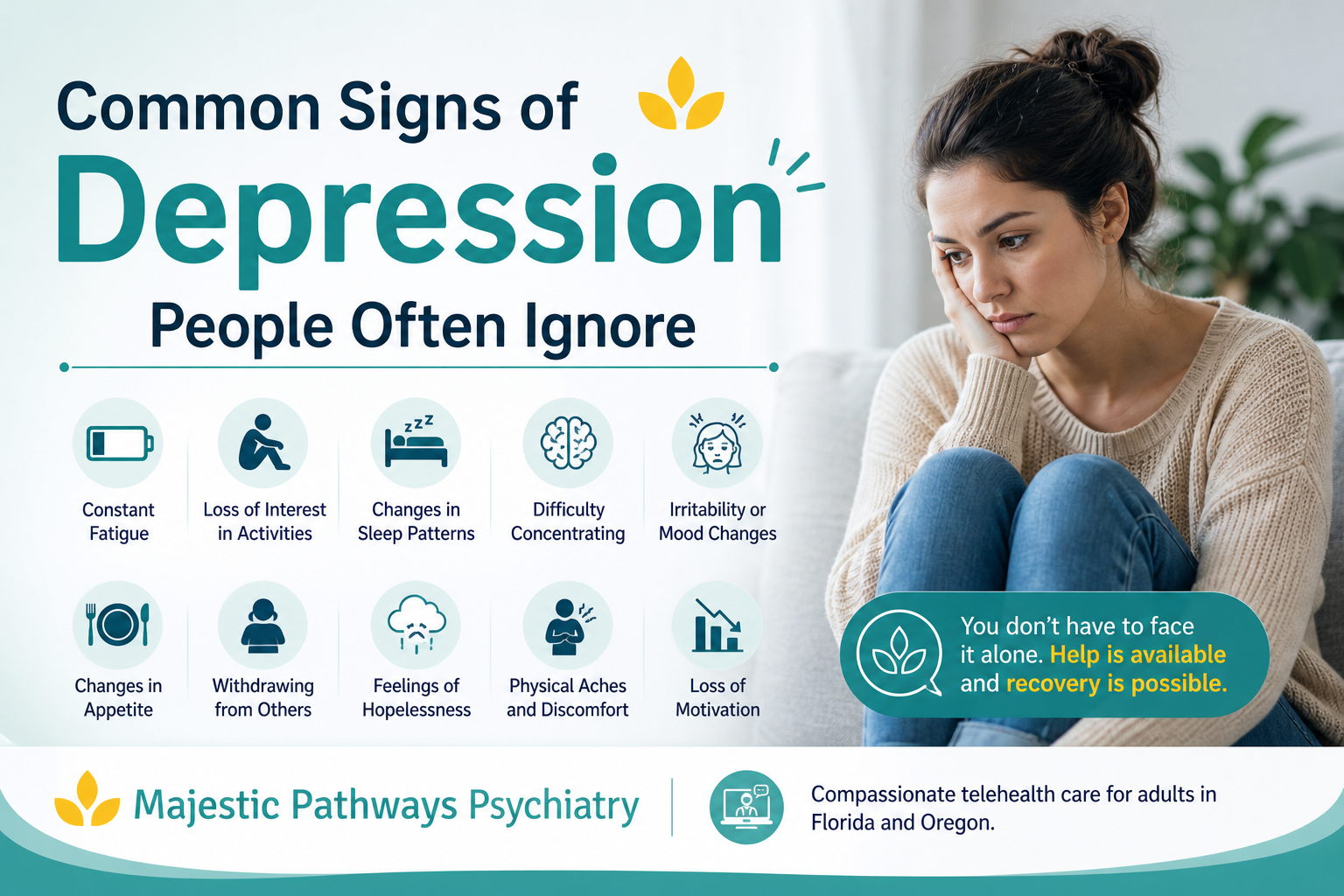
Common Signs of Depression People Often Ignore
Depression is one of the most common mental health conditions, yet it is often misunderstood or overlooked. Many people associate depression with constant sadness, but it can appear in more subtle ways that are easy to ignore.
Recognizing early signs of depression is important, as timely support can make a significant difference in recovery and overall well-being.
What Is Depression?
Depression is a mental health condition that affects mood, thinking, and daily functioning. It can develop gradually, making it difficult to recognize at first.
While everyone experiences low moods occasionally, depression involves persistent symptoms that last for weeks or longer.
Common Signs of Depression That Are Often Overlooked
1. Constant Fatigue
Feeling tired even after adequate rest may be more than physical exhaustion. Depression can reduce energy levels and make even simple tasks feel overwhelming.
2. Loss of Interest in Activities
A reduced interest in hobbies, social interactions, or activities that were once enjoyable is a common but often ignored sign.
3. Changes in Sleep Patterns
Depression can cause both insomnia and excessive sleeping. Difficulty falling asleep or staying asleep may also be linked to emotional distress.
4. Difficulty Concentrating
Trouble focusing, making decisions, or remembering details can be a sign of depression rather than just stress or distraction.
5. Irritability or Mood Changes
Depression does not always present as sadness. It may appear as irritability, frustration, or emotional sensitivity.
6. Changes in Appetite
Some individuals experience a loss of appetite, while others may eat more than usual. Significant weight changes can sometimes occur.
7. Withdrawing from Others
Avoiding social interactions or isolating oneself can be an early sign of depression. This withdrawal often develops gradually.
8. Feelings of Hopelessness
A sense that things will not improve or that the future feels uncertain can be a strong indicator of depression.
9. Physical Aches and Discomfort
Unexplained physical symptoms such as headaches, body aches, or digestive issues may be linked to mental health.
10. Loss of Motivation
Tasks that once felt manageable may begin to feel overwhelming or difficult to complete.
Why These Signs Are Often Ignored
Many people overlook these symptoms because they may:
- Assume they are just “tired” or “stressed”
- Believe symptoms will go away on their own
- Feel unsure about seeking help
- Not recognize the connection to mental health
Ignoring these signs can allow symptoms to worsen over time.
When to Seek Help
If these symptoms persist for more than two weeks or begin to interfere with daily life, professional support may be helpful.
Early intervention can improve outcomes and help individuals regain balance.
Treatment Options for Depression
Depression is treatable, and support is available. Treatment may include:
Therapy
Helps individuals understand thoughts and emotions while building coping strategies.
Medication Management
May be recommended in some cases to help regulate mood.
Lifestyle Support
Healthy routines, physical activity, and stress management can support recovery.
The Role of Telehealth in Mental Health Care
Telehealth allows individuals to access mental health support from home. It offers:
- Convenience
- Privacy
- Flexible scheduling
- Easy access to providers
This approach makes it easier for individuals to seek help when needed.
Take the First Step Toward Support
Recognizing the signs of depression is an important step toward improving mental health. If symptoms are affecting daily life, seeking professional support can help you move toward recovery.
At Majestic Pathways Psychiatry, telehealth psychiatric services are available for adults in Florida and Oregon, including evaluation, diagnosis, medication management, and therapy tailored to individual needs.