Medication vs Therapy for Depression: What Works Best?
Depression is a common mental health condition that affects how a person thinks, feels, and functions in daily life. While occasional sadness is a normal part of life, depression involves persistent symptoms that can interfere with work, relationships, and overall well-being.
When seeking help, many individuals wonder whether therapy or medication is the better option. Understanding how each approach works can help in making an informed decision about treatment.
Understanding Depression
Depression can present in different ways, but common symptoms include:
- Persistent sadness or low mood
- Loss of interest in activities
- Fatigue or low energy
- Difficulty concentrating
- Changes in sleep or appetite
- Feelings of hopelessness
If these symptoms last for more than a few weeks, professional support may be beneficial.
Therapy for Depression
Therapy is often a first-line treatment for depression. It focuses on understanding thoughts, emotions, and behaviors, and developing healthier ways to cope.
How Therapy Helps
Therapy can help individuals:
- Identify negative thought patterns
- Build coping strategies
- Improve emotional awareness
- Address past experiences or trauma
- Strengthen relationships
Over time, therapy supports long-term emotional resilience and personal growth.
Medication for Depression
Medication may be recommended when symptoms are more severe or persistent. It works by helping regulate brain chemicals that influence mood.
When Medication May Be Helpful
Medication may be considered when:
- Symptoms significantly impact daily functioning
- Therapy alone is not enough
- There is a history of recurring depression
- Symptoms include severe mood changes
Medication is typically monitored and adjusted to ensure effectiveness and minimize side effects.
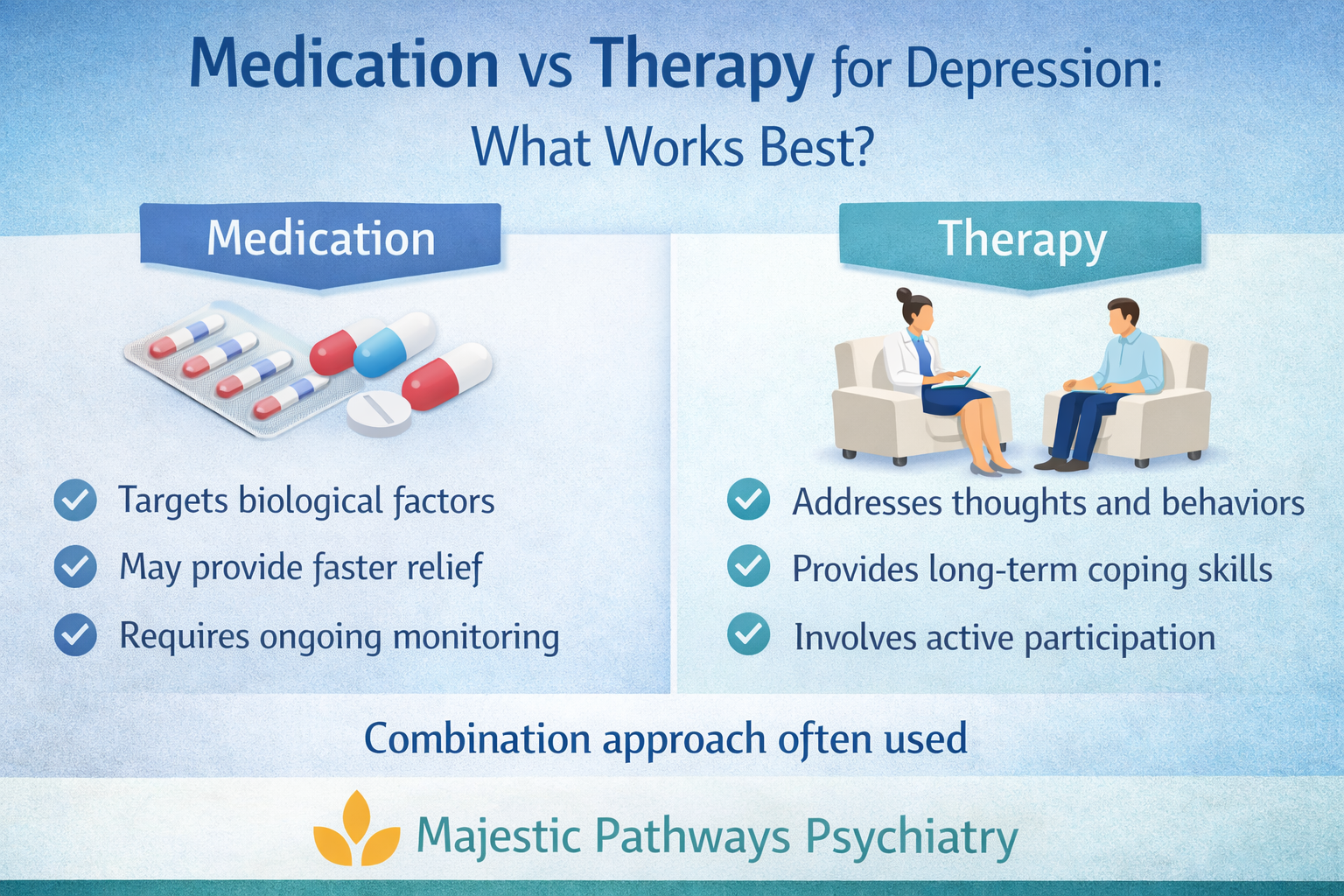
Therapy vs Medication: Key Differences
Therapy
- Focuses on thoughts, behaviors, and emotional patterns
- Provides long-term coping skills
- Requires active participation
Medication
- Targets biological factors affecting mood
- May provide faster symptom relief
- Requires ongoing monitoring
Both approaches have benefits, and the right choice depends on individual needs.
Combining Therapy and Medication
In many cases, a combination of therapy and medication is the most effective approach. While medication can help stabilize mood, therapy provides tools to manage thoughts and behaviors.
This combined approach often leads to better long-term outcomes.
Choosing the Right Treatment
There is no one-size-fits-all solution for depression treatment. The best approach depends on:
- Severity of symptoms
- Personal preferences
- Medical history
- Lifestyle factors
A comprehensive mental health evaluation can help determine the most appropriate treatment plan.
The Role of Telehealth in Depression Treatment
Telehealth has made it easier to access mental health care. Individuals can receive support through secure online appointments without needing to travel.
Benefits include:
- Convenience and flexibility
- Increased privacy
- Access to qualified providers
- Easier follow-up care
Moving Toward Recovery
Depression is treatable, and many individuals experience significant improvement with the right support. Seeking help is an important step toward improving emotional well-being and quality of life.
Get Professional Support
If you are experiencing symptoms of depression, professional care can help you explore the right treatment options.
At Majestic Pathways Psychiatry, telehealth psychiatric services are available for adults in Florida and Oregon, including evaluation, diagnosis, medication management, and therapy tailored to individual needs.