Panic Attacks: Symptoms, Causes, and Treatment Options
Panic attacks can be intense and overwhelming experiences that often occur suddenly and without warning. They can cause both physical and emotional symptoms that may feel frightening, especially for those experiencing them for the first time.
Understanding panic attacks can help individuals recognize symptoms and seek appropriate support.
What Is a Panic Attack?
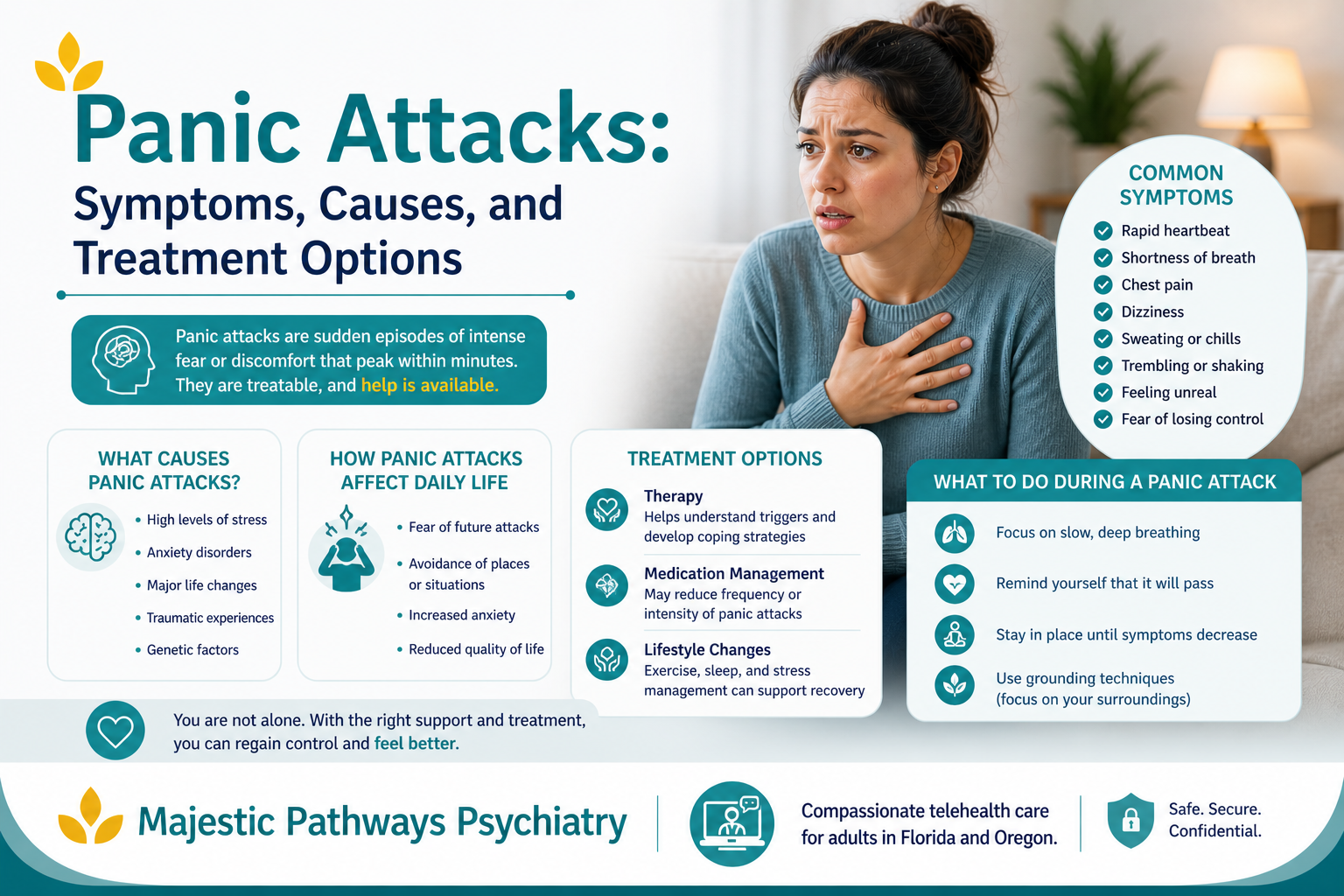
A panic attack is a sudden episode of intense fear or discomfort that peaks within minutes. These episodes can happen unexpectedly or be triggered by specific situations.
Although panic attacks are not life-threatening, they can feel severe and distressing.
Common Symptoms of Panic Attacks
Panic attacks often include a combination of physical and emotional symptoms such as:
- Rapid or pounding heartbeat
- Shortness of breath
- Chest pain or discomfort
- Dizziness or lightheadedness
- Sweating or chills
- Trembling or shaking
- Feeling detached or unreal
- Fear of losing control
These symptoms can be mistaken for other medical conditions, which is why proper evaluation is important.
What Causes Panic Attacks?
Panic attacks can occur for several reasons, including:
- High levels of stress
- Anxiety disorders
- Major life changes
- Traumatic experiences
- Genetic factors
Sometimes, panic attacks may occur without a clear cause.
How Panic Attacks Affect Daily Life
Recurring panic attacks can lead to:
- Fear of future attacks
- Avoidance of certain places or situations
- Increased anxiety
- Reduced quality of life
Over time, this can impact work, relationships, and daily functioning.
Treatment Options for Panic Attacks
Panic attacks are treatable, and several approaches can help manage symptoms effectively.
Therapy
Therapy can help individuals understand triggers and develop coping strategies to manage panic symptoms.
Medication Management
In some cases, medication may be recommended to reduce the frequency or intensity of panic attacks.
Breathing and Relaxation Techniques
Learning controlled breathing techniques can help reduce symptoms during a panic attack.
Lifestyle Changes
Regular exercise, proper sleep, and stress management can support overall mental health.
What to Do During a Panic Attack
If a panic attack occurs, the following steps may help:
- Focus on slow, deep breathing
- Remind yourself that the feeling will pass
- Stay in place until symptoms begin to decrease
- Try grounding techniques, such as focusing on surroundings
When to Seek Help
If panic attacks occur frequently or begin to affect daily life, professional support can help you understand triggers and develop effective coping strategies.
Get Support for Panic Attacks
Panic attacks can feel overwhelming, but support is available. With the right treatment and guidance, many individuals learn to manage symptoms and regain control.
At Majestic Pathways Psychiatry, telehealth psychiatric services are available for adults in Florida and Oregon, including evaluation, diagnosis, medication management, and therapy.