
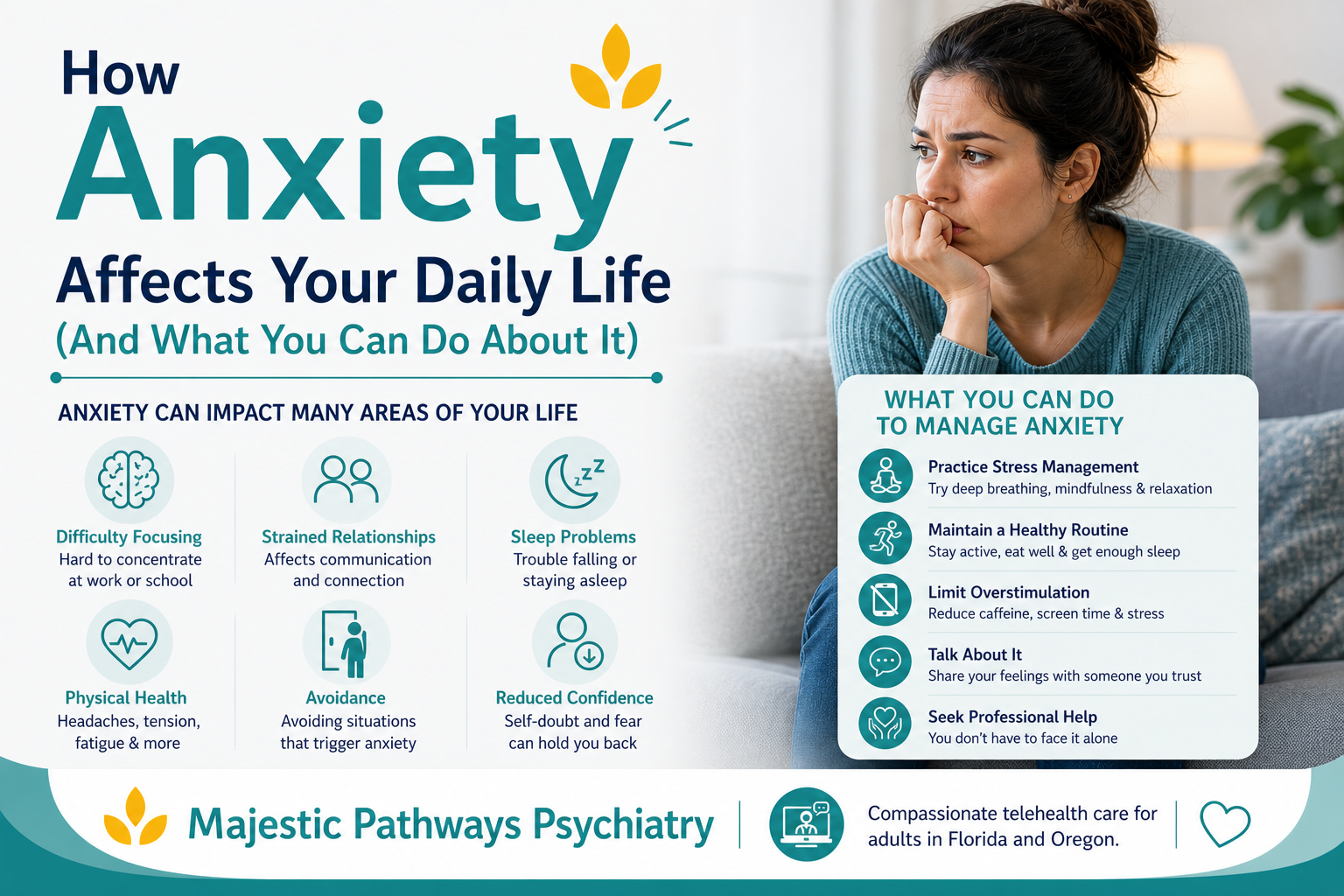
How Anxiety Affects Your Daily Life
Anxiety is more than just feeling stressed or worried. While occasional anxiety is a normal part of life, ongoing anxiety can affect how a person thinks, feels, and functions throughout the day.
Understanding how anxiety impacts daily life can help individuals recognize when it may be time to take action and seek support.
What Does Anxiety Feel Like?
Anxiety can affect both the mind and body. It often involves a sense of unease, fear, or worry that may not always have a clear cause.
Some people experience anxiety occasionally, while others may feel it more frequently or intensely.
How Anxiety Affects Daily Life
1. Difficulty Focusing at Work or School
Anxiety can make it hard to concentrate, complete tasks, or stay organized. Constant worry may interfere with productivity and decision-making.
2. Strained Relationships
Anxiety can impact communication and emotional availability. Individuals may feel easily overwhelmed, misunderstood, or withdrawn in social situations.
3. Sleep Problems
Racing thoughts and restlessness can make it difficult to fall asleep or stay asleep, leading to fatigue during the day.
4. Physical Health Effects
Anxiety often presents with physical symptoms such as:
- Headaches
- Muscle tension
- Rapid heartbeat
- Digestive discomfort
Over time, these symptoms can affect overall health.
5. Avoidance of Situations
People may begin avoiding situations that trigger anxiety, such as social events, travel, or new experiences. This can limit personal and professional growth.
6. Reduced Confidence
Persistent anxiety can lead to self-doubt and fear of making mistakes, which may impact confidence and decision-making.
What Causes Anxiety?
Anxiety can develop due to a combination of factors, including:
- Stressful life events
- Work or relationship pressures
- Past experiences or trauma
- Biological and genetic factors
Understanding the cause can help guide effective treatment.
What You Can Do to Manage Anxiety
Practice Stress Management
Techniques such as deep breathing, mindfulness, and relaxation exercises can help reduce anxiety symptoms.
Maintain a Healthy Routine
Regular sleep, balanced nutrition, and physical activity can support mental health.
Limit Overstimulation
Reducing caffeine intake, screen time, and exposure to stressful environments may help manage anxiety levels.
Talk About It
Sharing thoughts and concerns with a trusted person or professional can provide relief and perspective.
When to Seek Professional Help
If anxiety is persistent, worsening, or interfering with daily life, professional support can help identify underlying causes and provide effective treatment options.
Take the First Step Toward Balance
Managing anxiety is possible with the right support and strategies. If symptoms are affecting your daily life, seeking help can make a meaningful difference.
At Majestic Pathways Psychiatry, telehealth psychiatric care is available for adults in Florida and Oregon, offering evaluation, diagnosis, medication management, and therapy.