When Does Anxiety Become an Anxiety Disorder?
Anxiety is a natural response to stress and can be helpful in certain situations. It can improve focus, increase awareness, and prepare the body to respond to challenges. However, when anxiety becomes persistent, excessive, or difficult to control, it may develop into an anxiety disorder.
Understanding the difference between normal anxiety and a disorder can help individuals know when to seek support.
What Is Normal Anxiety?
Normal anxiety is temporary and usually tied to a specific situation, such as:
- Preparing for an important event
- Facing a challenging decision
- Experiencing a stressful life change
These feelings typically fade once the situation is resolved.
What Is an Anxiety Disorder?
An anxiety disorder involves ongoing and excessive worry that does not go away easily. It can interfere with daily activities, relationships, and overall quality of life.
Anxiety disorders can take different forms, but they all involve persistent fear or worry that is difficult to manage.
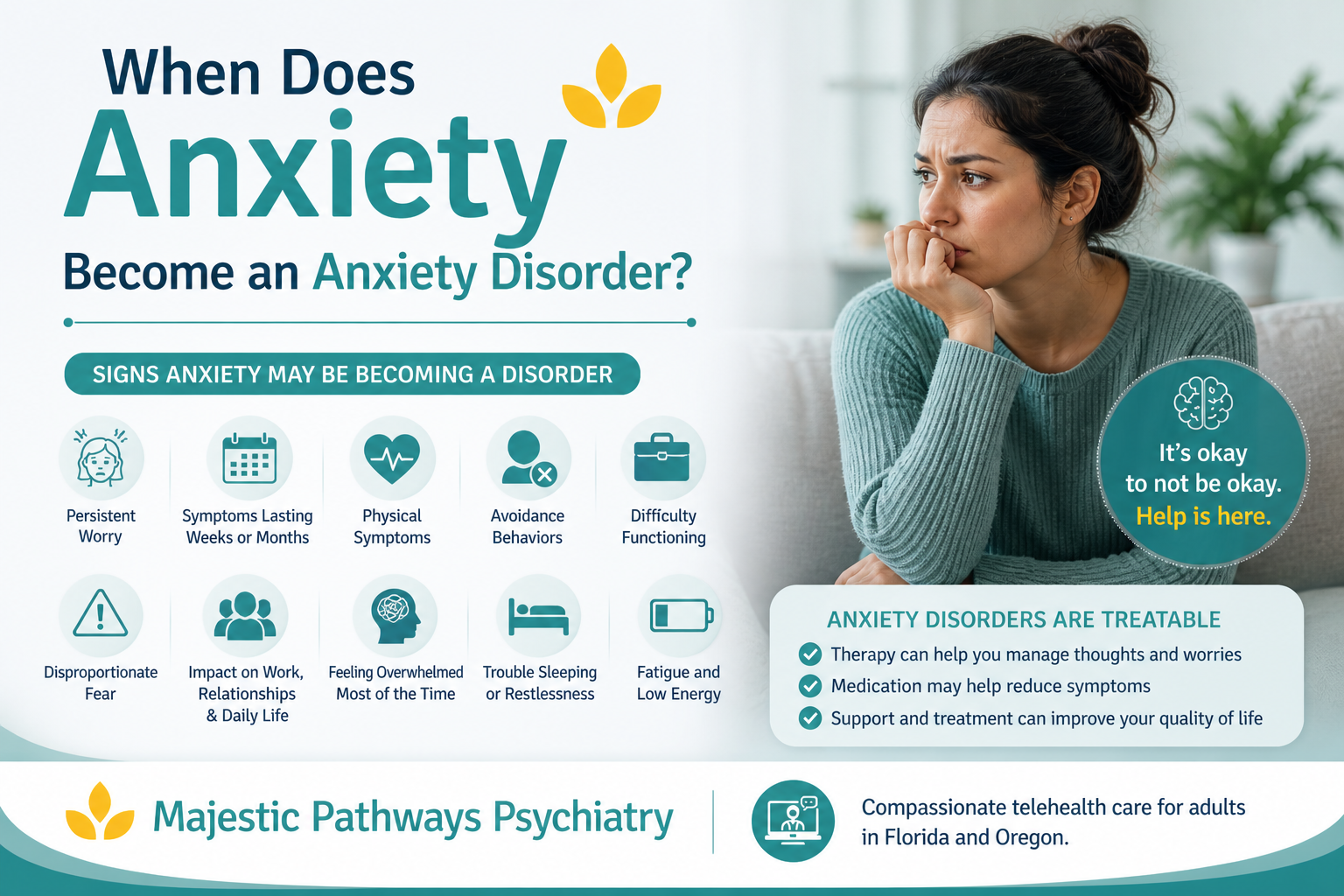
Signs Anxiety May Be Becoming a Disorder
1. Persistent Worry
Worry that occurs most days and feels difficult to control may be a key sign.
2. Symptoms Lasting for Weeks or Months
Unlike normal anxiety, symptoms of an anxiety disorder tend to last for extended periods.
3. Physical Symptoms
Common physical signs include:
- Rapid heartbeat
- Muscle tension
- Restlessness
- Fatigue
- Difficulty sleeping
4. Avoidance Behaviors
Avoiding situations that trigger anxiety can limit daily activities and reduce quality of life.
5. Difficulty Functioning
When anxiety begins to affect work, relationships, or daily responsibilities, it may indicate a disorder.
6. Disproportionate Fear
Feeling intense fear in situations that are not typically dangerous can be a sign of an anxiety disorder.
Common Types of Anxiety Disorders
Some common types include:
- Generalized anxiety disorder
- Panic disorder
- Social anxiety disorder
- Specific phobias
Each type has unique features but shares the common element of excessive fear or worry.
What Causes Anxiety Disorders?
Anxiety disorders can develop due to a combination of factors, including:
- Genetics
- Brain chemistry
- Life experiences or trauma
- Chronic stress
Understanding these factors can help guide treatment.
Treatment Options for Anxiety Disorders
Anxiety disorders are highly treatable. Common approaches include:
Therapy
Helps individuals manage thoughts and develop coping strategies.
Medication Management
May be used to reduce symptoms and improve daily functioning.
Lifestyle Changes
Regular exercise, healthy sleep, and stress management can support treatment.
Benefits of Telehealth for Anxiety Treatment
Telehealth makes it easier to access mental health care by offering:
- Flexible scheduling
- Comfort of home
- Reduced travel stress
- Access to qualified providers
When to Seek Professional Help
If anxiety is persistent, overwhelming, or interfering with daily life, professional support can help you better understand and manage your symptoms.
Start Your Path to Better Mental Health
If you are experiencing ongoing anxiety, seeking support is an important step toward improving your well-being.
At Majestic Pathways Psychiatry, telehealth psychiatric care is available for adults in Florida and Oregon, offering evaluation, diagnosis, medication management, and therapy.