
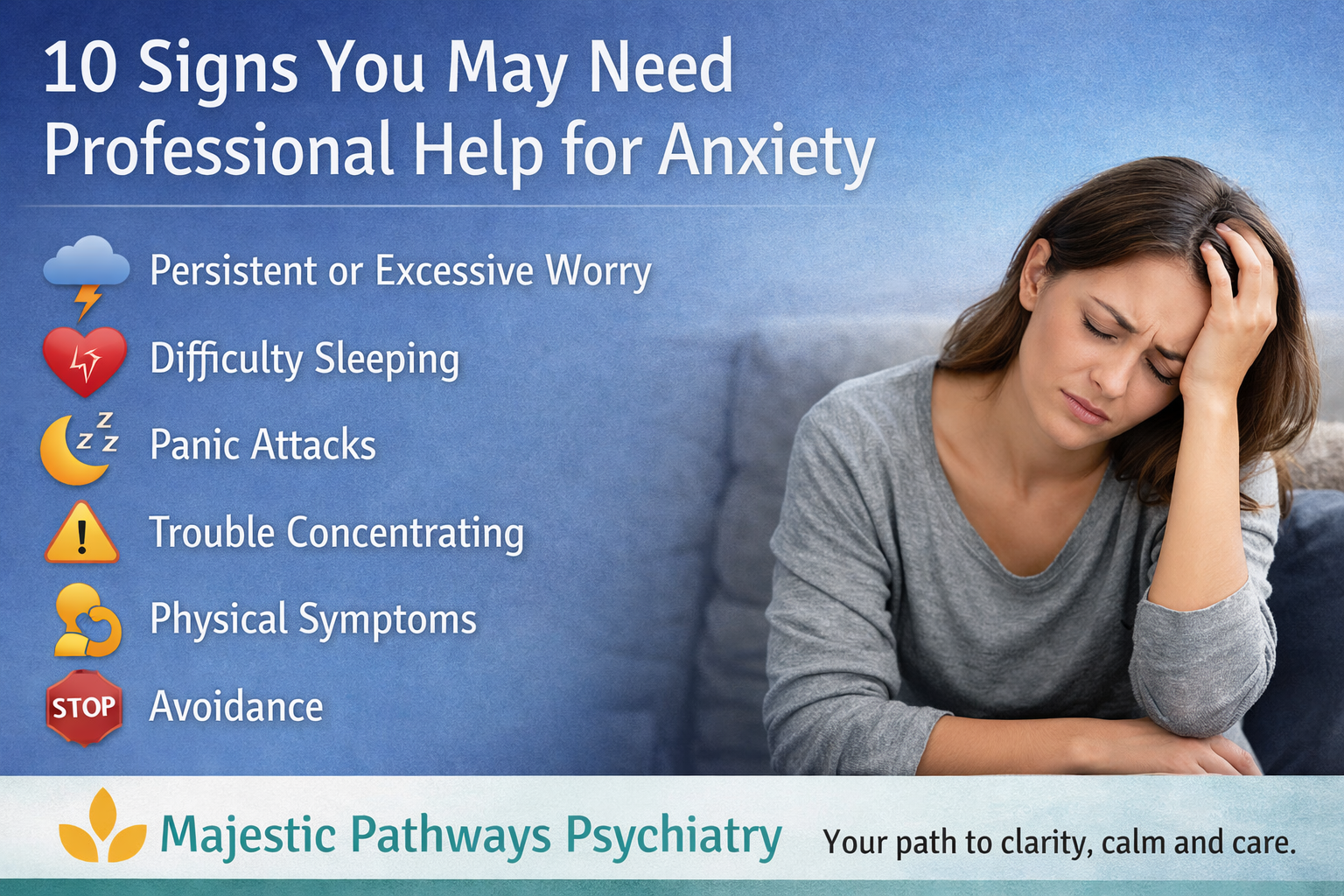
10 Signs You May Need Professional Help for Anxiety
Anxiety is a natural response to stress. It can help people stay alert and focused in challenging situations. However, when anxiety becomes persistent or overwhelming, it can begin to interfere with daily life, relationships, and overall well-being.
Recognizing the difference between everyday stress and a potential anxiety disorder is an important step toward better mental health.
What Is Anxiety?
Anxiety involves feelings of worry, nervousness, or fear that may be mild or severe. While occasional anxiety is normal, ongoing or excessive anxiety may indicate a need for professional support.
Anxiety disorders can affect how a person thinks, feels, and behaves, and they may also cause physical symptoms.
10 Signs You May Need Professional Help for Anxiety
1. Constant or Excessive Worry
Frequent worry about everyday situations—especially when it feels difficult to control—may be a sign of anxiety that requires attention.
2. Difficulty Sleeping
Racing thoughts, restlessness, or waking up frequently during the night can be linked to anxiety. Poor sleep often makes symptoms worse.
3. Panic Attacks
Sudden episodes of intense fear may include:
- Rapid heartbeat
- Shortness of breath
- Chest tightness
- Dizziness
- Sweating
Recurring panic attacks are a strong signal to seek professional support.
4. Trouble Concentrating
Difficulty focusing on tasks or conversations can result from constant mental worry and overstimulation.
5. Physical Symptoms Without Clear Cause
Anxiety often presents physically, including:
- Headaches
- Muscle tension
- Stomach discomfort
- Fatigue
If medical causes are ruled out, anxiety may be contributing to these symptoms.
6. Avoiding Certain Situations
Avoidance of social events, work responsibilities, or unfamiliar environments may develop as a way to cope with anxiety—but can limit daily functioning.
7. Feeling Constantly “On Edge”
A persistent sense of tension or alertness can make it difficult to relax, even in safe environments.
8. Irritability
Chronic anxiety can lead to frustration, mood swings, or emotional exhaustion.
9. Anxiety Affecting Daily Life
When anxiety interferes with work, relationships, or routine activities, it may be time to seek professional care.
10. Self-Help Strategies Are Not Enough
While exercise, relaxation techniques, and mindfulness can help, they may not fully manage moderate to severe anxiety.
Treatment Options for Anxiety
Effective anxiety treatment is personalized and may include a combination of approaches.
Therapy
Therapy helps identify thought patterns, manage stress, and develop coping strategies.
Medication Management
Medication may be recommended in some cases to help regulate mood and reduce symptoms.
Lifestyle Support
Healthy sleep, physical activity, and stress management techniques can support overall mental health.
Benefits of Telehealth Mental Health Care
Telehealth has made it easier to access mental health care from home. Many people choose online care because it offers:
- Convenience and flexibility
- Reduced travel time
- Increased comfort and privacy
- Access to qualified providers
When to Seek Help
If anxiety is persistent, worsening, or affecting your quality of life, professional support can help you better understand and manage your symptoms.
Take the First Step Toward Better Mental Health
If anxiety is interfering with your daily life, seeking professional support can help you regain balance and confidence.
At Majestic Pathways Psychiatry, telehealth psychiatric services are available for adults in Florida and Oregon, including evaluation, diagnosis, medication management, and therapy tailored to individual needs.